
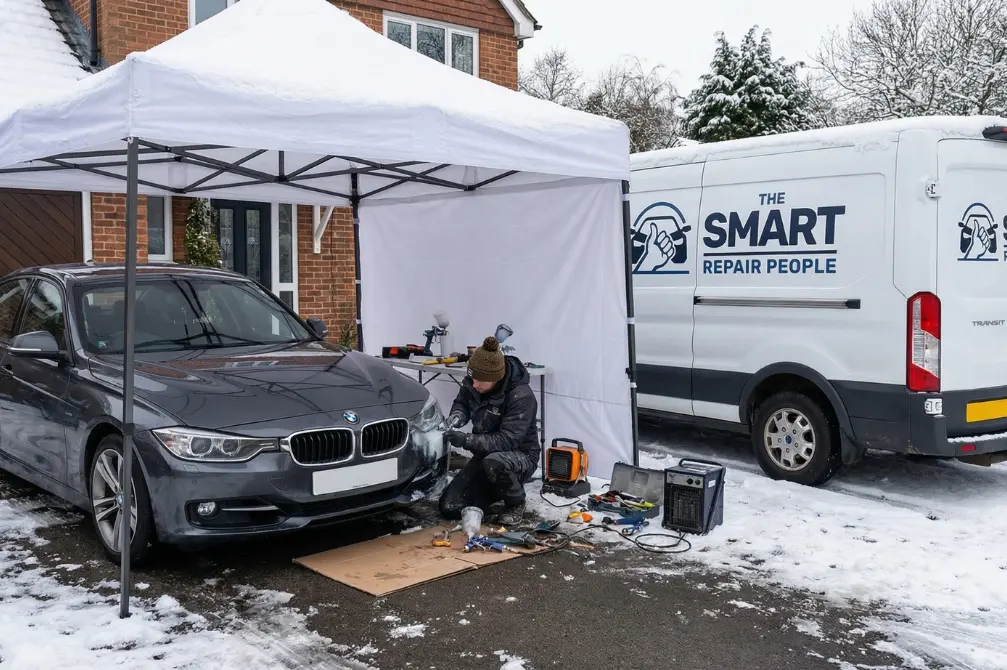
Can SMART Repairs Be Carried Out in Cold Weather?
When the temperature drops and winter sets in, a lot of drivers think they'll have to wait until spring to sort out any paintwork or bodywork issues. There's this assumption that the cold will stop the paint from drying properly, or that mobile repair vans just can't operate when it's freezing outside.
But here's the thing—SMART repairs can absolutely be done in cold weather. In fact, winter might actually be one of the better times to get minor damage fixed. Let me explain why.
So What Exactly Is SMART Repair?
SMART stands for Small to Medium Area Repair Technology. It's basically a way of fixing localised damage without having to repaint entire panels. Think bumper scuffs, scratches, stone chips, small dents—that sort of thing.
Instead of your car disappearing into a bodyshop for days, a technician can often come to you and sort it in a few hours. It's quicker, cheaper, and honestly pretty convenient if you've got a busy schedule.
Why Do People Think You Can't Repair Cars in Winter?
I get it. Paint and cold weather don't sound like a great combination. People worry the paint won't cure, that it'll peel off after a week, or that the colour won't match properly.
And yes, if someone's doing a dodgy job in their driveway with no proper kit, those concerns are valid. But professional SMART repair technicians? They've got this sorted.
How Do They Actually Do It When It's Freezing?
Mobile vans are basically workshops on wheels. They're heated, insulated, and kitted out with everything needed to control the environment. So even if it's minus two outside, inside the van it's warm and stable.
The materials are stored properly too. Paint needs to be kept at the right temperature, and technicians will warm up the panel before starting work. They'll also adjust timings and use products suited to winter conditions.
Drying and curing are controlled. This is the big one. They use infrared lamps and heated airflow to make sure the paint cures properly, regardless of what the weather's doing outside. It's not a case of hoping for the best—it's engineered to work.
What About Colour Matching?
Good question. The colour-matching process uses your car's paint code and computerised systems to get the exact shade. That doesn't change with the temperature. The match is just as accurate in December as it is in July.
What Can Actually Be Repaired in Winter?
Pretty much anything that falls under the SMART repair umbrella:
Bumper scuffs are really common in winter. Icy car parks, poor visibility, tight spaces—it all adds up. These are perfect for mobile repair.
Scratches from brushing snow off the car, or catching the door on something in the dark, can usually be sorted quickly.
Stone chips are everywhere in winter because of all the grit on the roads. Getting them filled early stops rust from taking hold.
Minor dents can still be fixed, though the technique might vary depending on where the dent is and how cold it actually is.
Why Winter Might Actually Be the Best Time to Get Repairs Done
Here's where it gets interesting.
Rust doesn't wait for spring. Winter roads are covered in salt. If you've got a chip or scratch that's gone through to the metal, moisture and salt will get in there fast. Rust can start forming within weeks, especially with all the freeze-thaw cycles we get.
Small damage gets worse. Cold weather makes paint more brittle. A tiny chip can spread. A scratch can lift at the edges. What might be a quick fix now could turn into something much bigger if you leave it.
You'll be ahead of the game in spring. A lot of people wait until the weather warms up to deal with winter damage, only to find that what could've been a simple repair has turned into a much more expensive job. Getting it done now means your car's already sorted when the sun comes out.
It's quieter, so you can often get booked in faster. Repair services tend to be less busy in winter, which can mean more flexibility with appointments and less waiting around.
Is It Actually Safe to Do Repairs When It's Really Cold?
Yes, as long as it's done by someone who knows what they're doing. If conditions genuinely aren't suitable—like if it's dangerously icy or temperatures are extreme—then a professional will reschedule. They're not going to risk a poor result just to get the job done.
But for most UK winter days? It's absolutely fine.
What Happens If You Just Leave It Until Spring?
Honestly, you're gambling. The damage might stay the same, but there's a good chance it won't. Rust can take hold, the affected area can grow, and what was a straightforward repair can turn into panel resprays or worse.
Plus, if you're planning to sell or trade in your car, visible damage—or worse, rust—will hit the value hard.
A Few Myths Worth Clearing Up
"Paint won't dry in the cold"—not true when it's done properly with controlled curing.
"Mobile repairs aren't possible in winter"—completely false. The vans are designed for year-round work.
"I'll just wait until it warms up"—often ends up being more hassle and more expensive.
Looking After Your Repair Once It's Done
After the work's finished, there are a few things worth keeping in mind. Avoid washing the car for the first 48 hours or so (your technician will advise). Don't scrape ice directly off the repaired area. Be gentle when brushing snow off. And try to rinse road salt off when you can.
Just basic care really, but it helps the repair last.
Bottom Line
Cold weather doesn't stop SMART repairs from being done—it just means the technician needs the right setup. With modern equipment and proper processes, winter repairs are just as effective as summer ones.
And in a lot of cases, getting damage sorted during winter actually makes more sense. You're protecting your car from rust, stopping small problems from becoming big ones, and avoiding the spring rush.
So if your car's picked up a few battle scars from the winter roads, don't assume you have to live with them until the weather improves. Get them looked at now, and you'll probably save yourself some hassle down the line.